Wearable data collection for task automation
The worker wears it. The robot runs it.
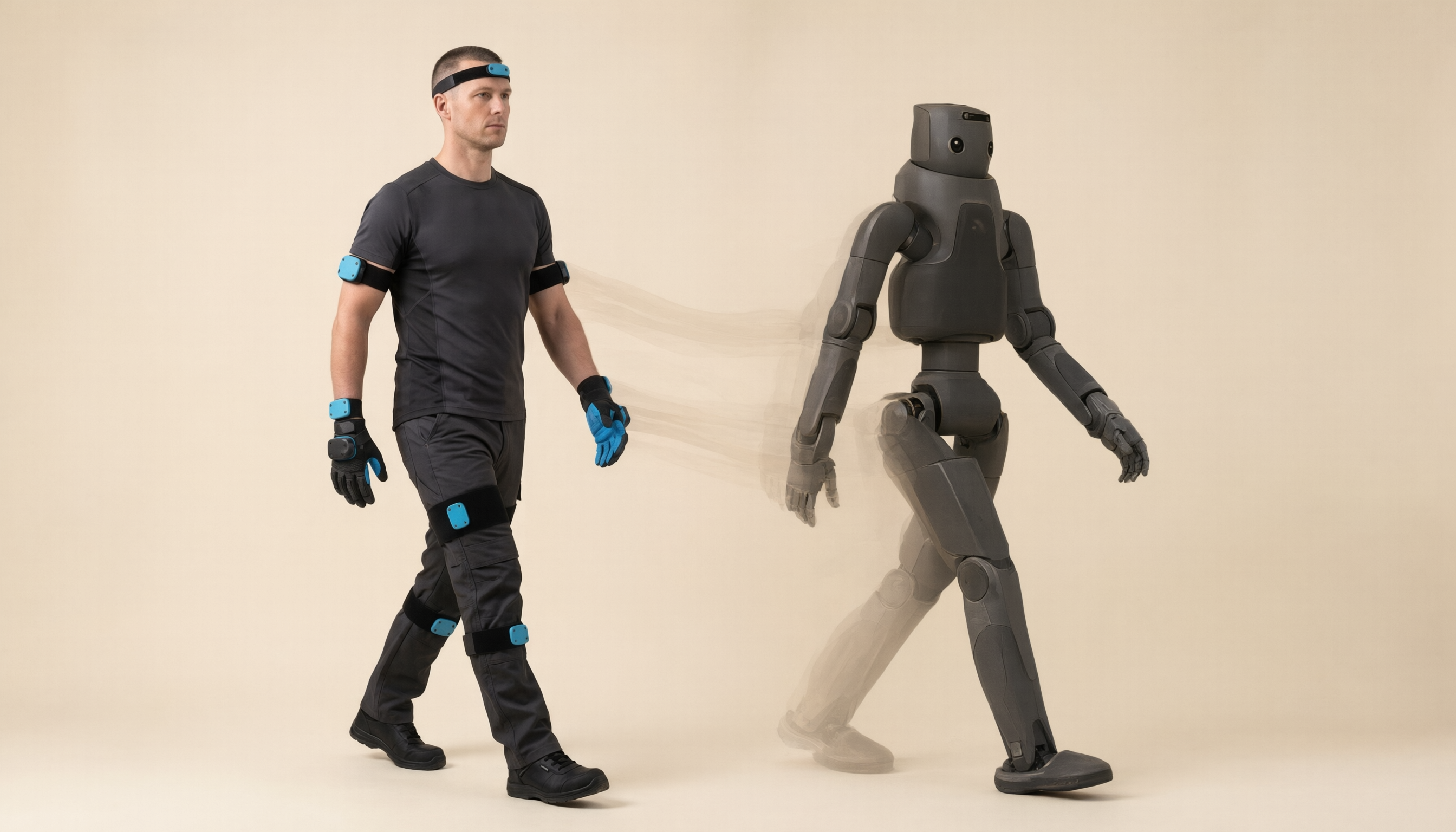
While you wear the gripper on shift, it records what the cameras see, where your hand moves, and when the fingers open and close. Then the same gripper attaches to the arm and the robot performs the job.
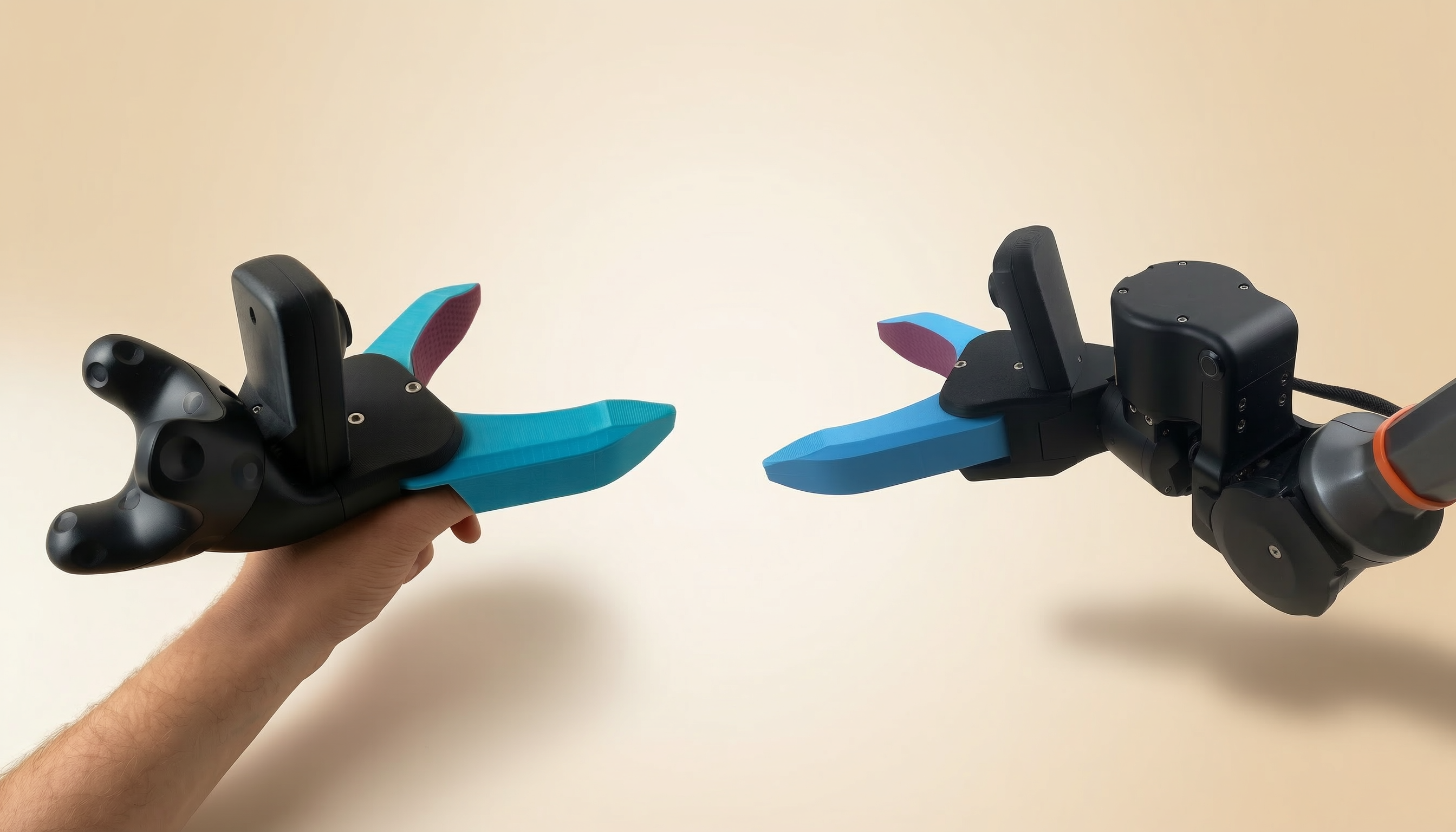
- Its position and orientation
- What the two cameras see
- When the fingers open and close
- Same device the worker wore
- Performs the task it learned
- Works with any robot
From human skill to robot skill.
The gripper records the workers' normal tasks, and the robot learns from that data.
Collect data. Or drive the robot directly.
The gripper tracks its position and 3D orientation with enough precision to drive the robot in real time. Wear it to collect training data in production, or hold it to drive the robot by hand.
Four ways to teach a robot. Three fail in real work.
Some methods train the robot in a clean copy of the world, not on the factory floor. Others train it on a human hand, not its own gripper. Either way, it learns the job in a place and a body that are not its own.
| Method | How it works | Reality check |
|---|---|---|
| Simulation | The robot is trained in a physics simulator that approximates objects, materials, contacts, and dynamics. |
|
| Teleoperation | A person controls the robot arm with a joystick and performs a task with it. |
|
| Learning from video | The robot is trained on video of human hands from public footage or a body-mounted camera. |
|
| Primate Gripper | A worker wears the robot's own gripper and sensors while doing the actual job. |
|
Serious work, simple gripper.
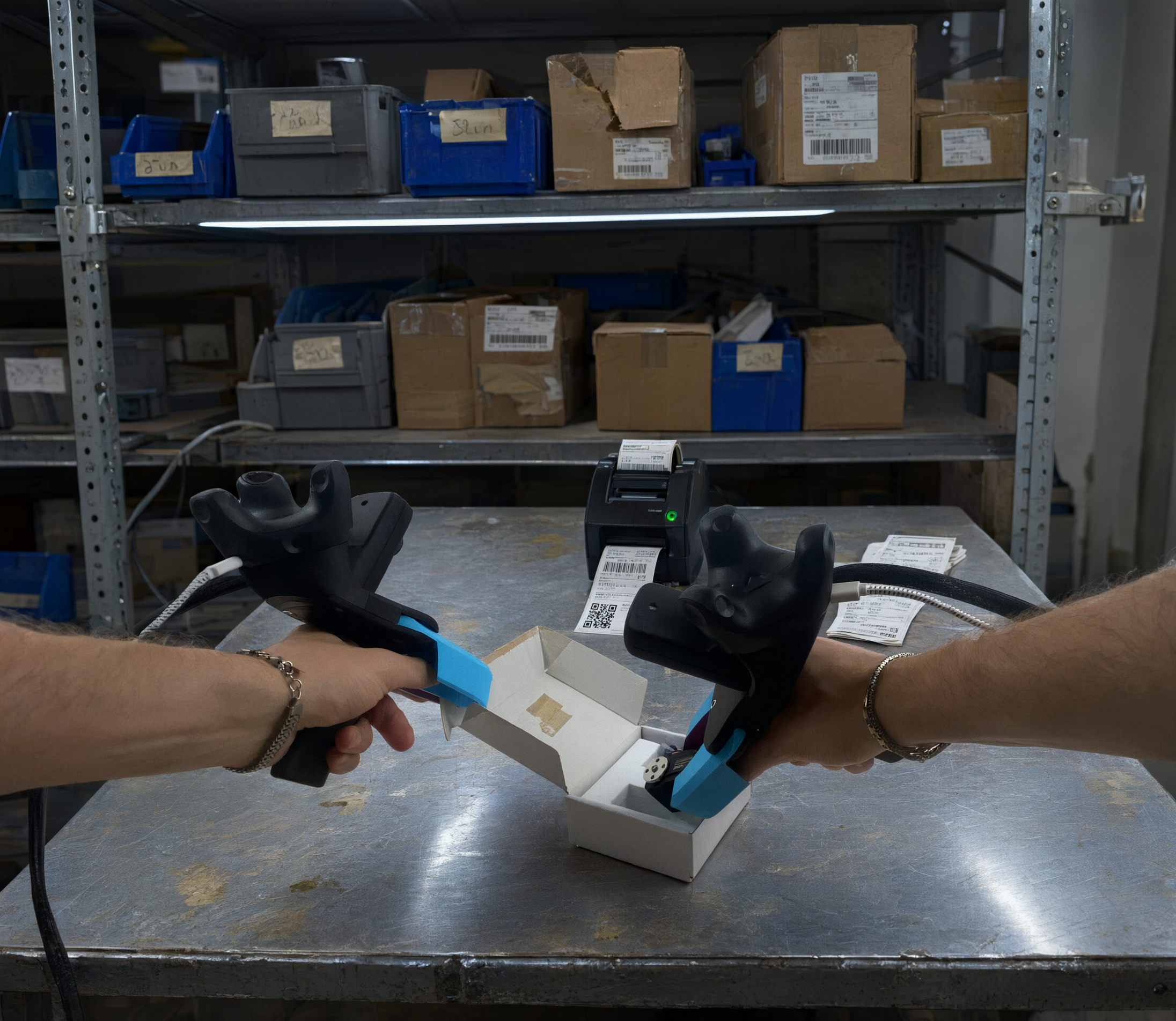
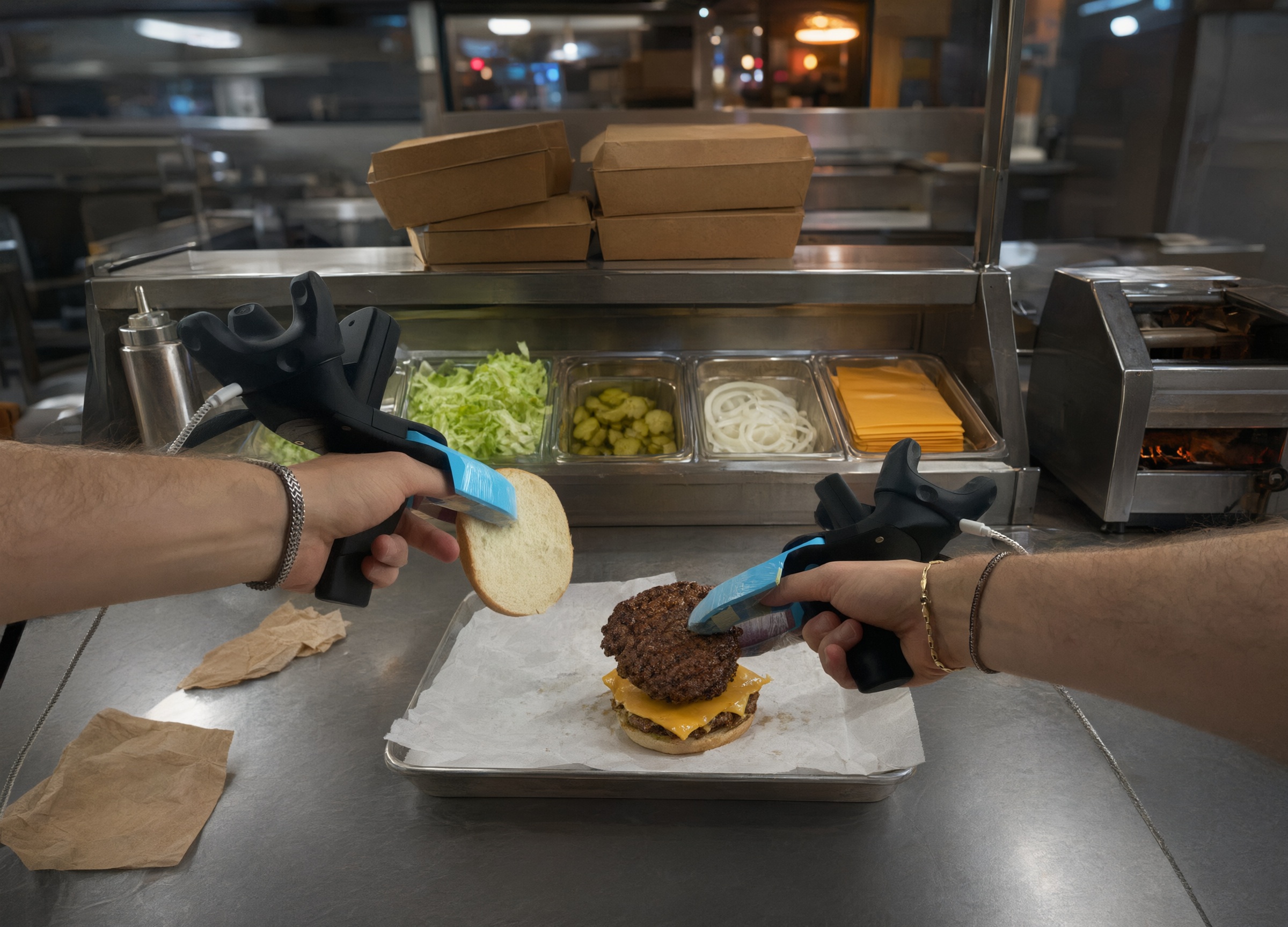
A two-finger gripper can already handle many high-value tasks, for example warehouse pick-and-pack and food assembly.
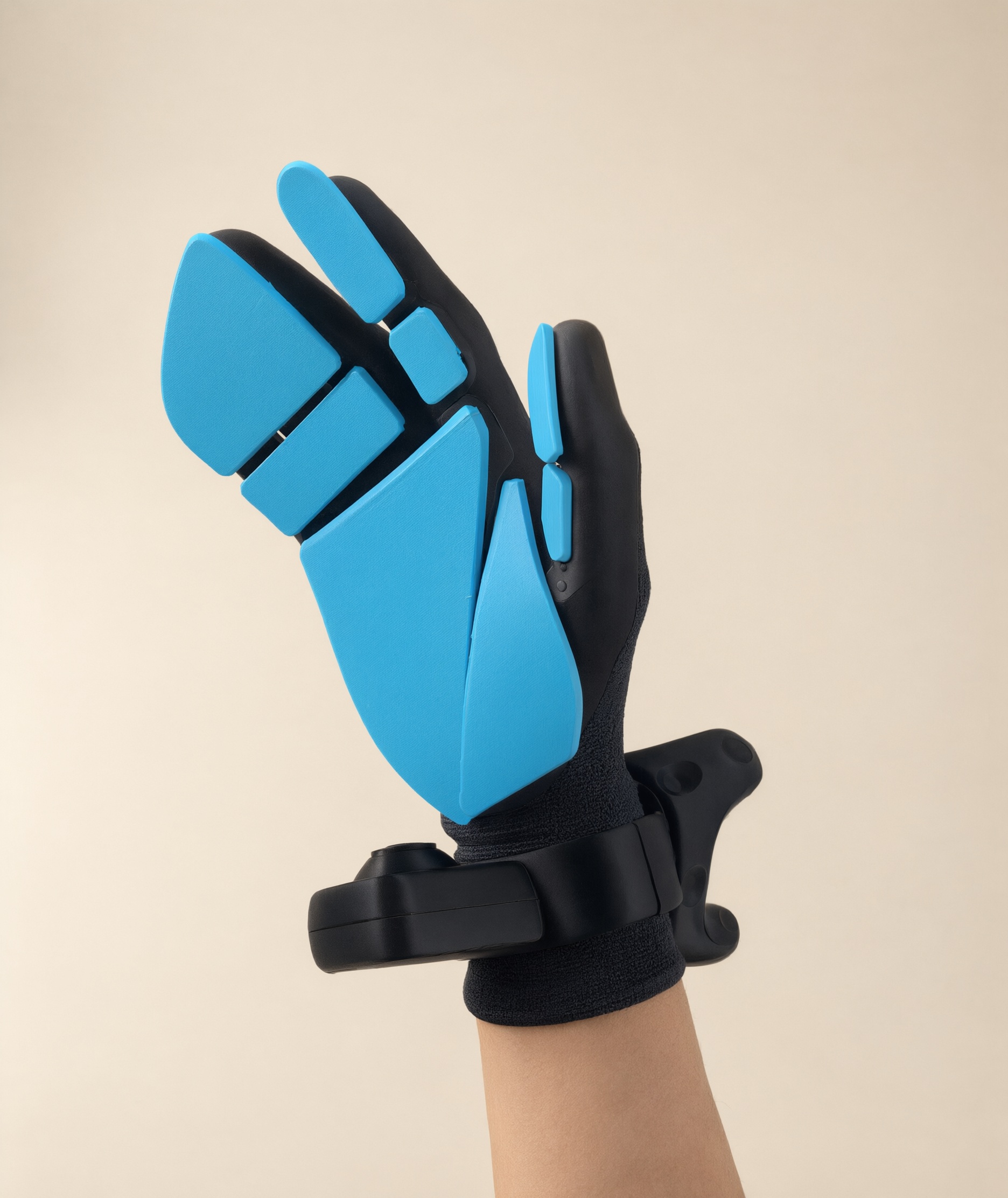
Beyond the gripper.
Built by roboticists.


- PhD, Robotics & AI · University of Oxford.
- Postdoctoral Researcher · EPFL.
- Designed one of the first three reinforcement-learning locomotion controllers for legged robots in the UK.
- Built the AI that automated phone loading into chargers for a high-volume production line, completing 550 consecutive cycles without error. Watch the video ↓
- MSc in Robotics · EPFL.
- Robotics Research Engineer · EPFL.
- Built a full tendon-driven humanoid robot from scratch: mechanical design, actuation, control, integration.
- Deep expertise: hardware design, mechatronics, rapid prototyping.




Turn your work into robot skills.
Reserve your units now or schedule a call to explore how our gripper could automate your tasks.